Flinn Works: Men in Feminism – Full-Frontal / Oh Man! / Kalinga – Sophiensæle | Independent Theater in Berlin
Flinn Works: Men in Feminism – Full-Frontal / Oh Man! / Kalinga
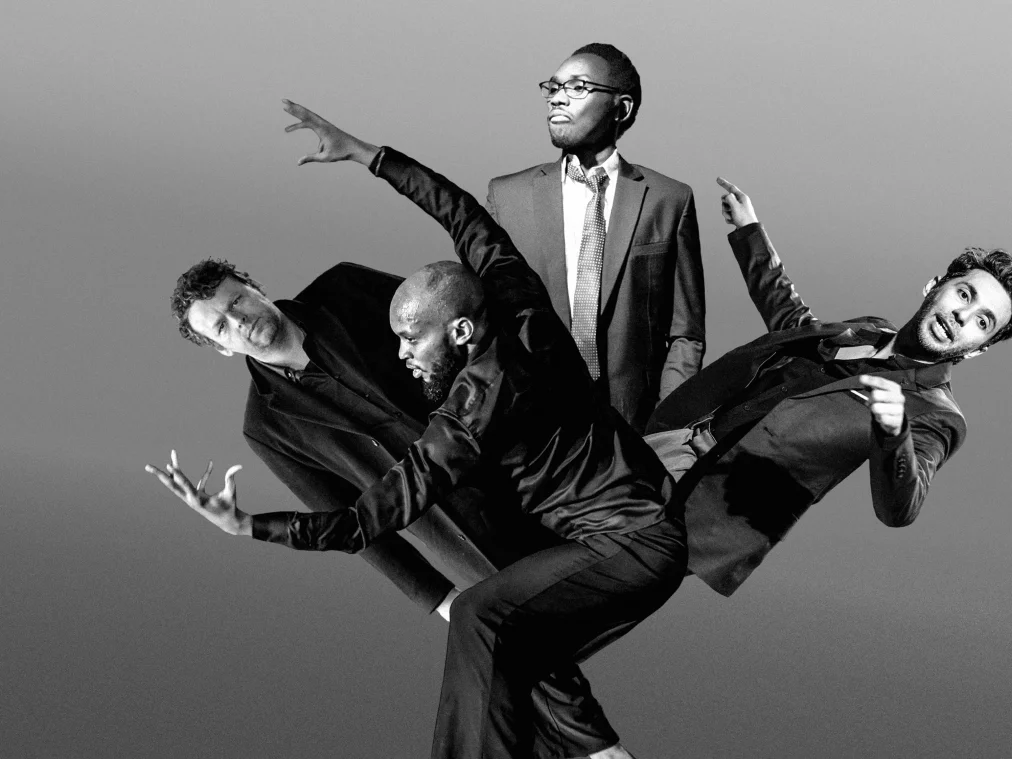
The trilogy Men in Feminism examines the role of privileged men in feminism from German/Swiss, Rwandan and Indian perspectives – by and with men and feminists. What roles do men play in feminism and what do feminists want from the most privileged men in their societies?
The three performance parts of Men in Feminism are shown one after the other: The theater performance Full-Frontal (India) looks for the ideal feminist man in form of an audition. Kalinga (Rwanda) is a dance theater piece developed by male dancers that question gender equality in todays Rwanda and Oh Man! (Germany/Switzerland) is a subversive stand-up comedy performance.
Full-Frontal
Full-Frontal exposes the tensions between privilege and patriarchy, confession and critique. It interrogates the idea of the “feminist man” in contemporary India through the process of an audition, a space where performance becomes inquiry, and unlearning takes centre stage. Guided by an unseen voice – part director, part conscience, part social mirror – the performer traverses a terrain of inherited privilege, myth, and memory, seeking not resolution, but the courage to inhabit discomfort.
Oh Man!
Not only women, but men also suffer in patriarchy. How does a man live, think, and perform in patriarchy once he has recognized this? And how does a comedian deal with the fact that sexist jokes no longer work? Is failure a tentative beginning of unlearning old patterns? With a microphone on an empty stage, Johannes Dullin and Lisa Stepf perform their way through bad jokes, statistics, extreme situations, and suppressed feelings. In doing so, they explore the power of language and the microphone and examine the gaps between performative masculinity, nice men, and feminist demands.
Kalinga
Kalinga is a dance-theater play that questions what it means to be a feminist man in modern Rwanda. The word feminism does not exist in the Kinyarwanda language, even though gender equality is politically promoted at all levels in Rwanda, where women make up 74 % of the labor force. The play follows two Rwandan men as they navigate their perceptions and struggles around equality between men and women. At the heart of the story stands the Kalinga, a drum symbolizing power and authority. But is that power truly shared equally in today’s Rwanda?
The information on accessibility is still in progress and will be updated as soon as possible. If any questions remain unanswered until then, please feel free to contact the communication department at barrierefreiheit@sophiensaele.com or 030 27 89 00 35. Please note that details may change by the day of the event. Therefore, if you find out after you have purchased your ticket that the performance is no longer accessible to you, you can contact us for a ticket return at ticketing@sophiensaele.com or 030 27 89 00 45 until 5 business days after the event (Monday through Friday between 10am and 6pm).
Duration
- A total of 180 minutes with one break.
- The evening consists of three different performances, each lasting 45 minutes.
Language
- Full Frontal: Spoken English.
- KALINGA: Spoken English. Idioms from Rwanda, translated directly by the performers.
- Oh Man!: Spoken German. English written translation accessible via QR code.
Light
- Full Frontal: Rather dark lighting. No sudden light changes.
- KALINGA: Rather dark lighting. At one moment, fast light changes with colorful lights (disco atmosphere).
- Oh Man!: Rather dark lighting. No sudden light changes.
Sound
- Full Frontal: Background music. A voice-over can be heard. The piece is not loud.
- KALINGA: Live music. A drum is played. It can get loud.
- Oh Man!: Live singing and background music. The piece is not loud.
Other
- Full Frontal: Stage fog is used. There are video projections with close-ups of the performers and live transmission. A dance scene is also projected.
- KALINGA: Stage fog is used. Performers drink beer. There are short moments of voluntary interaction.
- Oh Man!: Stage fog is used. In the final scene, some audience members are invited on stage. Participation is voluntary.
Audience
- Grandstand with seat cushions and chairs with backrests.
- 2 beanbag seats available upon request.
- 2 wheelchair spaces available upon request.
Early boarding
There will be an extended entry period. Doors open 10 minutes before the performance begins.
Tickets
- Reservations can be made via the ticket telephone at 030 283 52 66, Monday to Friday from 4pm-6pm
- Via the online ticket shop
- At the box office
You can also find more information about accessibility at the house here.
Team Rwanda
Text: Ruzibiza Wesley, Bingo Regis
Performance: Bingo Regis, Dizy Quan [Ndayishimiye Desiré Arsène]
Choreography: Dizy Quan [Ndayishimiye Desiré Arsène], Ruzibiza Wesley
Artistic direction: Ruzibiza Wesley
Dramaturgy: Ruzibiza Wesley
Assistant director: Bingo Regis
Costumes design: King Ngabo
Light design: Susana Alonso
Sound design: Andi Otto
With the support of Museum Ingabo
Team India
Concept: Abhay Mahajan
Performance: Abhay Mahajan
Co-concept: Sharanya Ramprakash
Co-development, direction: Sharanya Ramprakash
Dramaturgy: Sridhar Prasad
Creative producer: Alif
Production assistant: Mahati Systla
Light design: Susana Alonso
Music consultant: Andi Otto
Supported by Goethe Institut/Max Muller Bhavan – Bangalore and Pune
Team Switzerland/Germany
Artistic director Men in Feminism, Performance Oh Man!: Lisa Stepf
Artistic director Men in Feminism, Director Oh Man!: Sophia Stepf
Performance: Johannes Dullin
Composition: Andi Otto
Lighting design, technical director Men in Feminism: Susana Alonso
Movement coach: Elias Kurth
Artistic collaboration: Maja Zagórska
Assistant: Shreyan Saraswat
Lighting assistant: Özge Tuncali
Production management Men in Feminism: Marit Buchmeier, Lisanne Grotz / xplus3 Produktionsbüro Office
A production by Flinn Works in co-production with Amizero Kompagnie, Alif, Bühne Aarau und Sophiensæle. Funded by the Capital Cultural Fund (HKF). With the friendly support of Goethe-Institut / Max Mueller Bhavan Bangalore and Pune. Media partners: Missy Magazine, Siegessäule, taz.
Flinn Works (led by Sophia Stepf and Lisa Stepf) engages with issues of globalization, focusing on postcolonial and feminist questions. The performances and installations are based on extensive research and draw on the personal perspectives of international participants to create a multi-perspective dramaturgy. At the intersection of ethnology and documentary formats, the productions evolve their form as a consequence of the content and the talents of the team involved. Flinn Works has received three META Awards in New Delhi, the Förderpreis of the Zürcher Kantonalbank, the Tabori Award of the Fonds Darstellende Künste, and the award of the International Theatre Institute Germany. The projects are presented in Germany, Switzerland, India, and Tanzania.
Johannes Dullin (Switzerland/Germany) is a comedian, actor, performer and theater maker. He works at the intersection of theater, performance and comedy. Trained at the Accademia Teatro Dimitri and the University of the Arts Bern, he has worked at numerous European theaters and festivals. Since 2014, Dullin has focused on solo works, which have received multiple awards and have been presented internationally. He also founded Banality Dreams, was a member of Authentic Boys and teaches as a lecturer at various art universities.
Abhay Mahajan (India) is an actor and movement artist. His work spans theater, television, cinema and digital storytelling. He is best known for his role as Saurabh Mandal in TVF Pitchers (TV series). As a founding member of the Natak Company in Pune, he has participated in over 30 productions with more than 400 performances, including internationally touring plays and adaptations. He trained in contemporary dance (Attakaleri, Bangalore). In his performances, he explores the intersection of body, presence and storytelling. He has been awarded the Vinod Doshi Fellowship and the INLAKS Theatre Award.
Sharanya Ramprakash (India) is a theater maker based in Bengaluru, working at the intersection of gender, tradition, and language. She writes, performs, directs and collaborates with a wide range of formats, communities and theater makers on local, national and international levels. Her work is research-based, collaborative and exploratory. She is an INLAKS Fellow and a member of the Lincoln Center Director’s Lab in New York. She received the Shankar Nag Theatre Award in 2022.
Sridhar Prasad (India) is a social scientist working at a policy think tank based in Bengaluru. His research areas include gender studies, municipal governance, and accountability. Over the past ten years, he has also collaborated with director Sharanya Ramprakash on three of her stage productions, contributing research, cultural context, and feedback.
Alif (India) is a multidisciplinary arts organization dedicated to producing, capacity building, and representing artists in the performing arts. Alif is known for its bold, innovative work that brings together diverse voices and invests in the future of the arts through mentoring, workshops, and industry initiatives. With care and integrity, the organization represents exceptional artists and manages the distribution of their work. Guided by the values of courage, excellence, respect, and integrity, Alif builds ecosystems that empower artists, connect communities, and inspire change.
Bingo Regis (Rwanda) is a Rwandan actor, director, and playwright committed to developing a professional, sustainable, and community-rooted theater practice. He has performed in or written several productions, with his works staged nationally and internationally across Africa and Europe — including at renowned venues in Paris and Berlin. Trained by local and international mentors, Regis combines artistic vision, professionalism, and social engagement in his theater practice.
Desire Arsène Ndayishimiye (Rwanda) is a Rwandan choreographer, dancer, and dance teacher based in Kigali. As the artistic director of the Next Move Dance Company, he creates contemporary works that address identity, emotions, and transformation. With international experience in Europe and Africa, Desiré is known for blending traditional Rwandan roots with contemporary movements to tell human-centered stories through dance.
Wesley Ruzibiza (Rwanda) is a leading Rwandan dancer and choreographer who served from 2020 to 2025 as Co-Artistic Director of École des Sables in Senegal, the largest choreographic center on the African continent. He teaches internationally and holds regular teaching positions in France and Tanzania. A graduate of École des Sables in traditional and contemporary African dance, he also holds a degree in finance and project management. As a multidisciplinary artist, dancer, choreographer, actor, and director, he has created and staged numerous dance and theater productions in Africa, Europe, and the United States, which have been presented at major national and international cultural events.
-
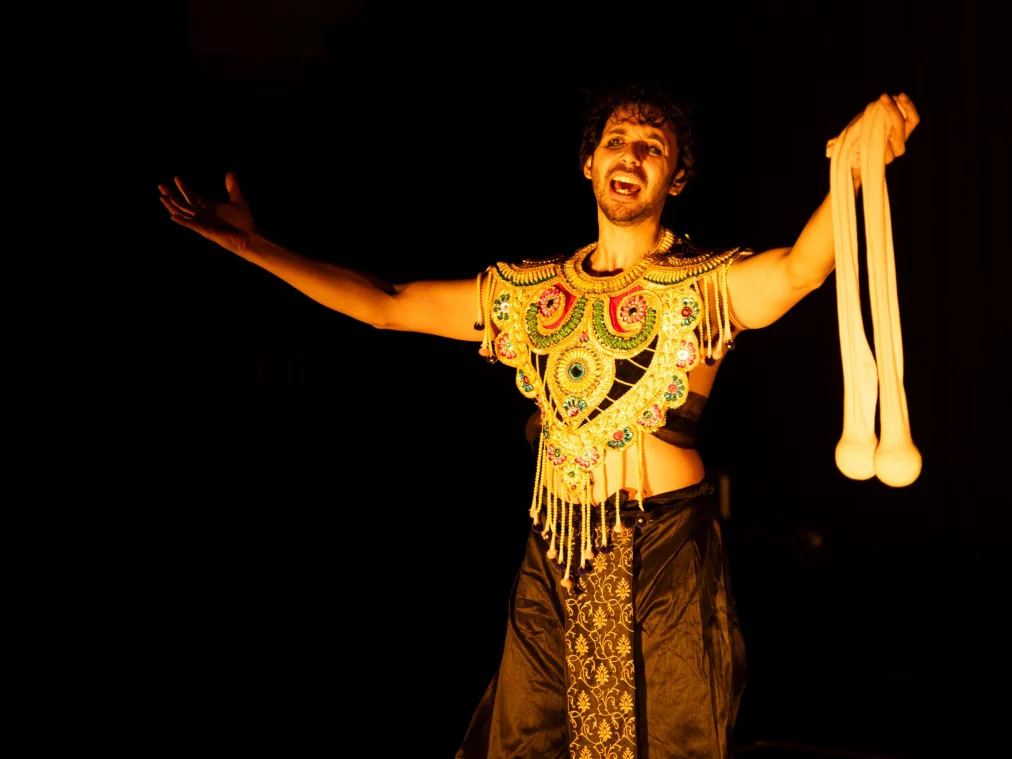
Full Frontal © Mayra Wallraff -
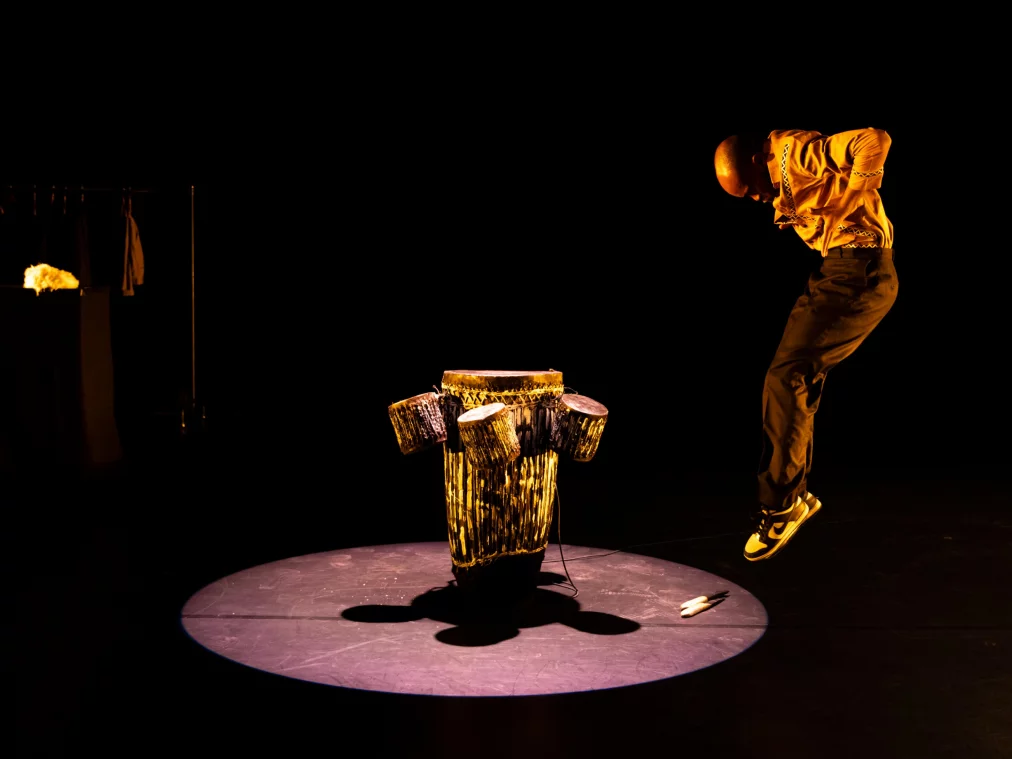
Kalinga © Mayra Wallraff -
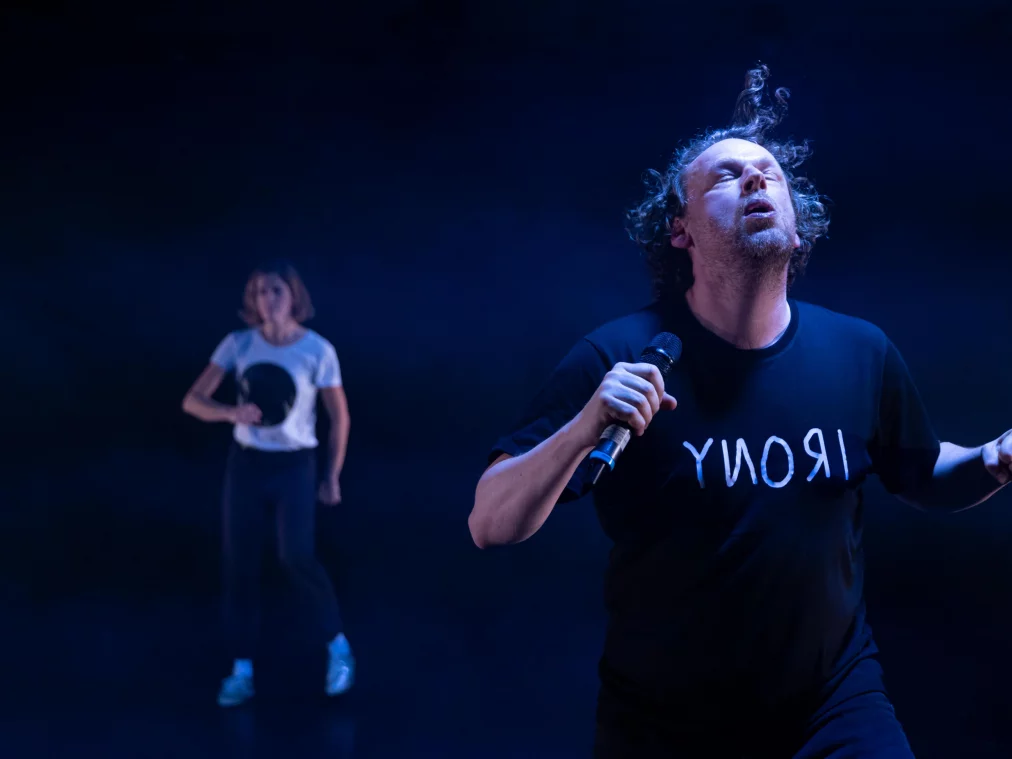
Oh Man! © Mayra Wallraff -

Full Frontal © Mayra Wallraff -
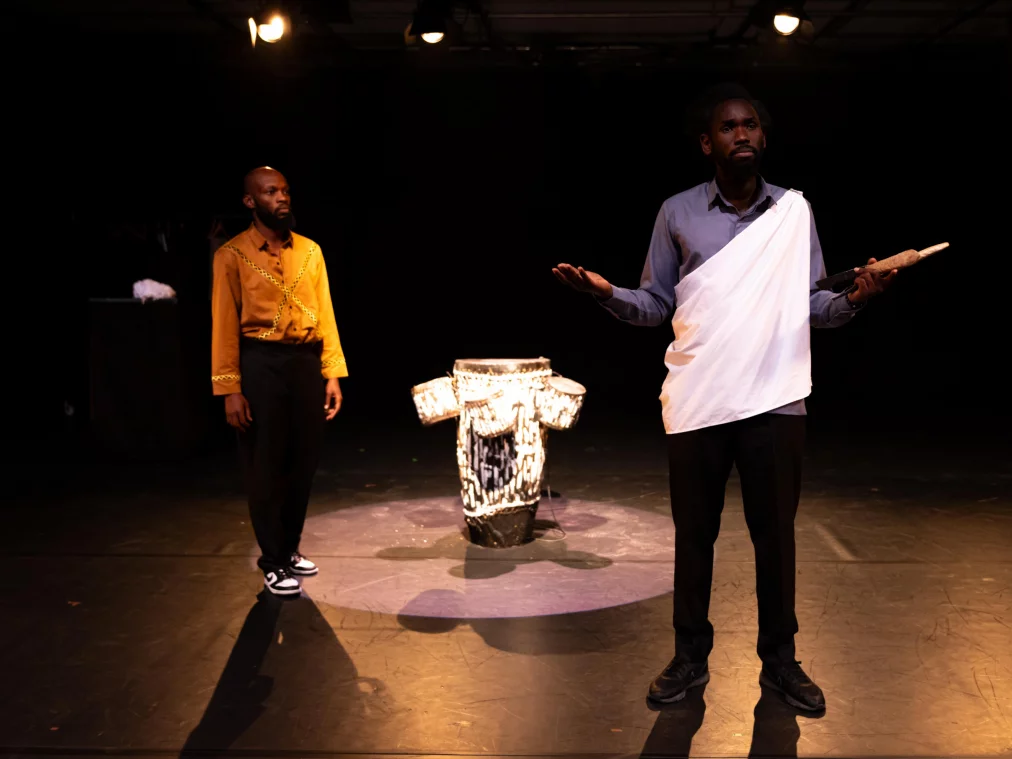
Kalinga © Mayra Wallraff -
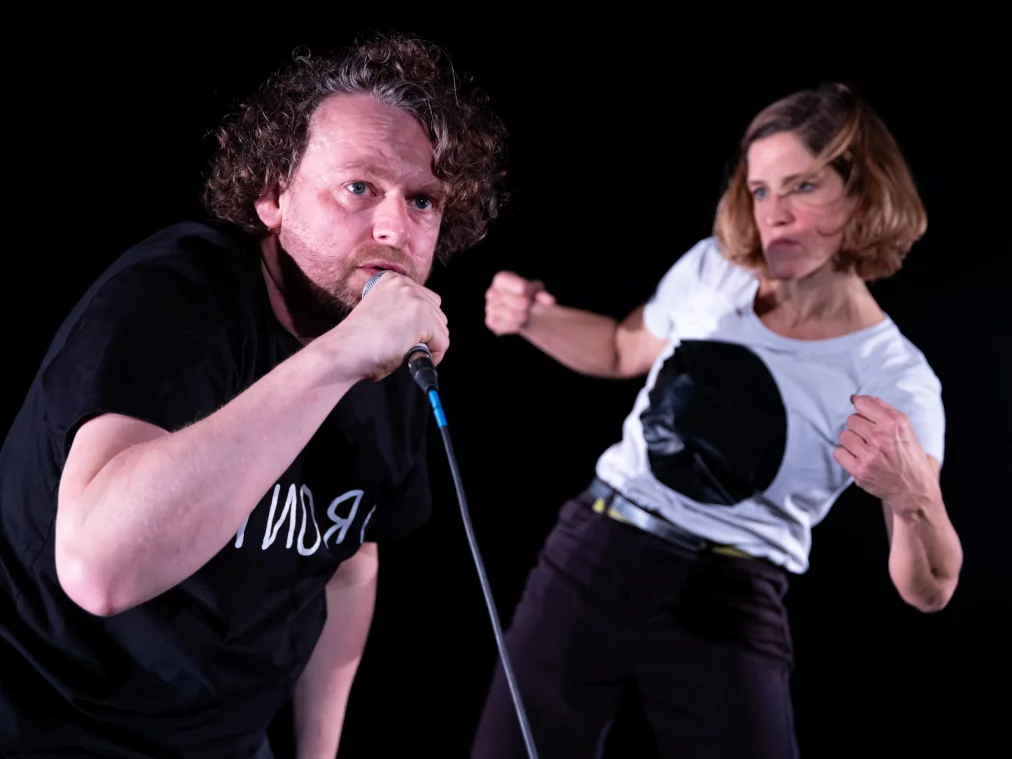
Oh Man! © Mayra Wallraff -
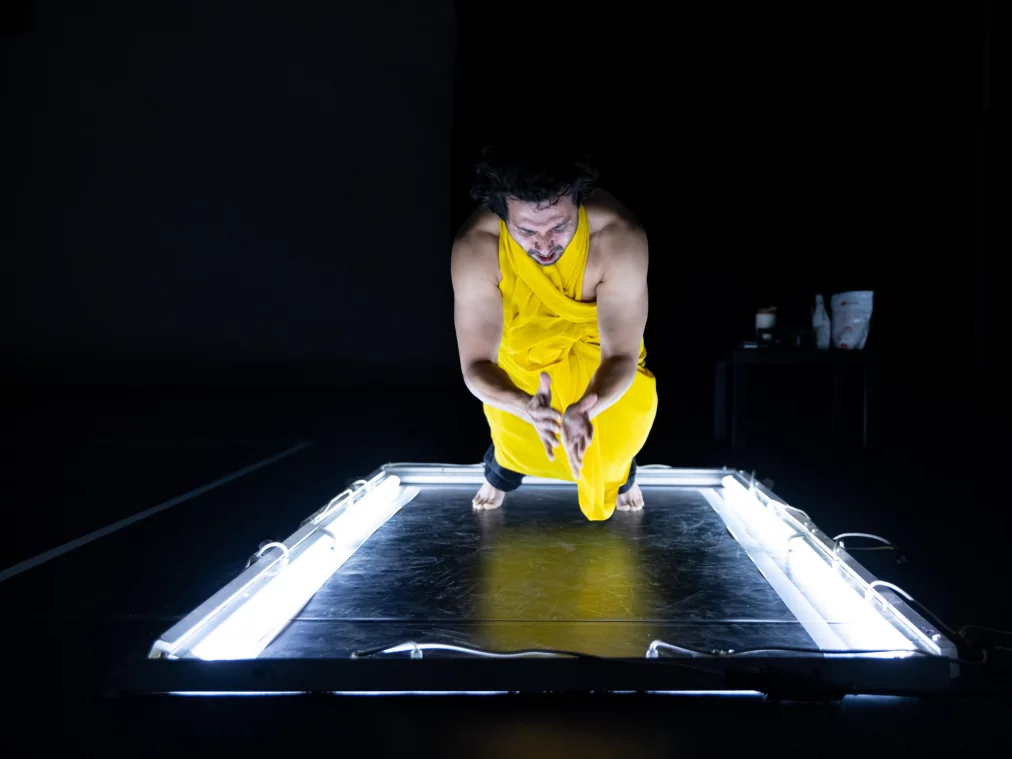
Full Frontal © Mayra Wallraff -
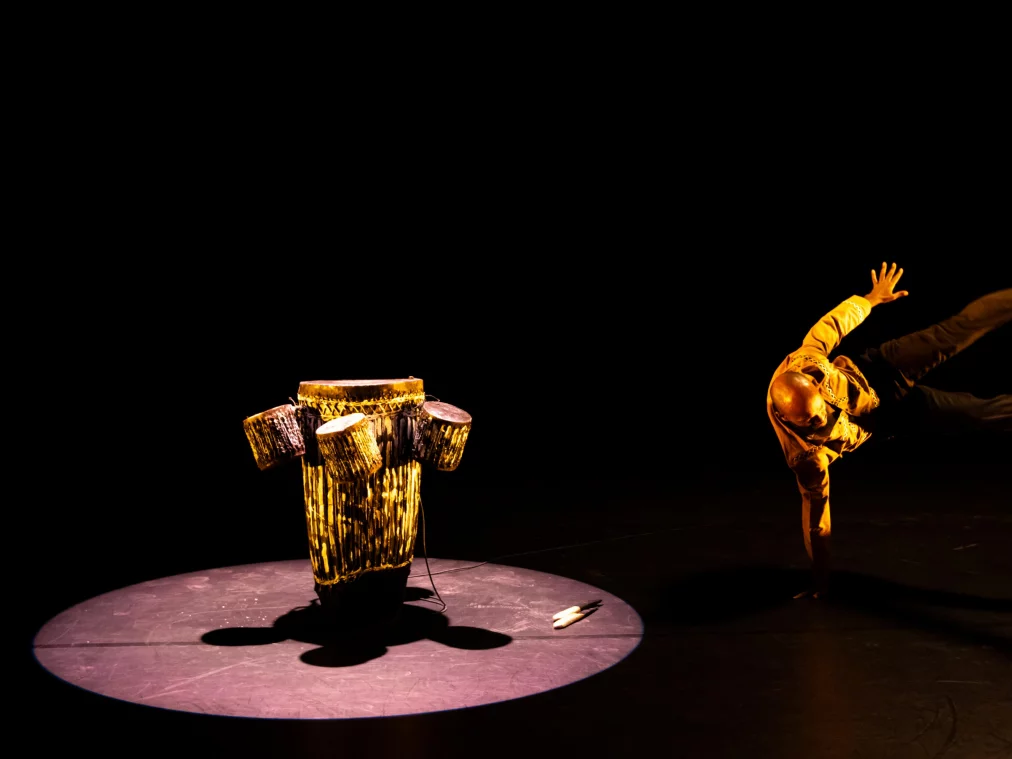
Kalinga © Mayra Wallraff