NEW TECHNIQUES XVII: Naledi Majola – Sophiensæle | Independent Theater in Berlin
NEW TECHNIQUES XVII: Naledi Majola
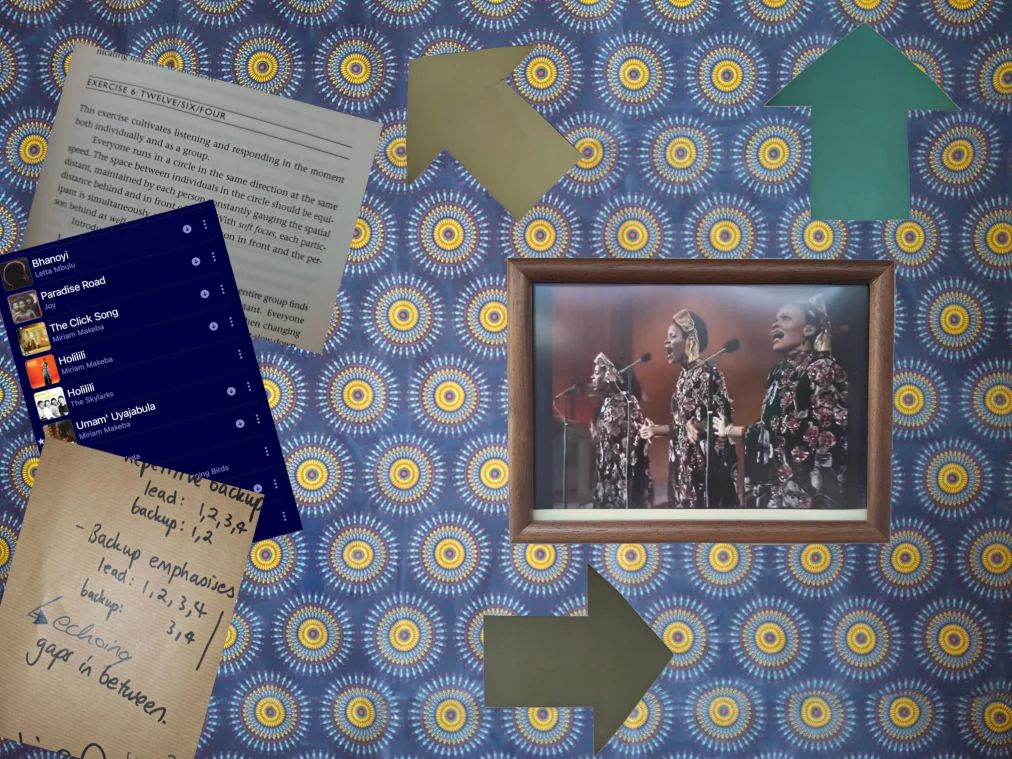
In October 2026, Sophiensæle welcomes the choreographer Naledi Majola and their team as part of the dance residency program NEW TECHNIQUES.
This research is inspired by the history of black South African musicians during Apartheid, especially those exiled in the West. It places the political circumstances and personal journeys that led these musicians to international stages in the second half of the 20th century on a historical continuum that contemporary Afro-diasporic artists find themselves on today. What does it take to arrive to these stages and what happens on them? The sounds and movements of these musicians meet the work of performers Naledi Majola, Sarhaly aka Goldie and Chiyedza Mukada, and musician and voice teacher Lindiwe Pale, as they develop a group performance practice. Their starting point is the question “How do we sing through the body?” They apply principles embedded in the music such as rhythm, choral unison, call-and-response, and repetition to movement and vocal explorations. The choreographic formations of singing groups like disco trio Joy catalyse topographical explorations into how an ensemble moves through space together. As the practice develops, what kinds of affects, images, and stories emerge?
With our dance residency program NEW TECHNIQUES, we support early-career artists based in Berlin and simultaneously reflect on the concept of technique in the contemporary dance scene. We have named our residency NEW TECHNIQUES because we want to explore the notion of technique together with emerging dance artists—a term that, in recent decades, has been replaced by “practice” in dance discourse, education, and criticism. We ask what technique might mean in today’s pluralized dance world. This exploration is not only about how existing dance techniques taught in schools and studios (from ballet, modern, contemporary dance, or urban styles) relate to cultural identity, power dynamics, historical contexts, or social practices, but also about how other forms of embodied knowledge and self-technologies passed down in our communities and societies influence the field of dance and the artistic practices of the invited choreographers.
The NEW TECHNIQUES residency program is part of the Residency Support for Berlin dance artists, through which the Berlin Senate Department for Culture and Social Cohesion first introduced and awarded residency programs in 2020.
Naledi Majola is a South African performer and maker based in Berlin. After completing a BA in Theatre and Performance specializing in Acting at the University of Cape Town (2014–2017), they worked as an actor, participating in various film, television, theater, and commercial projects. In parallel, they developed a performance and research practice, encompassing media like movement, voice, sound design, and writing.
After working in Cape Town for some years, Majola moved to Berlin and completed the MA Solo/Dance/Authorship at HZT Berlin in 2024. Their work seeks to blur the line between theory and practice and is inspired by performance studies, pop culture, and South African history and art.