Simone Dede Ayivi & Kompliz*innen: Schwarze Leute – Reclaiming Memories – Sophiensæle | Independent Theater in Berlin
Simone Dede Ayivi & Kompliz*innen: Schwarze Leute – Reclaiming Memories
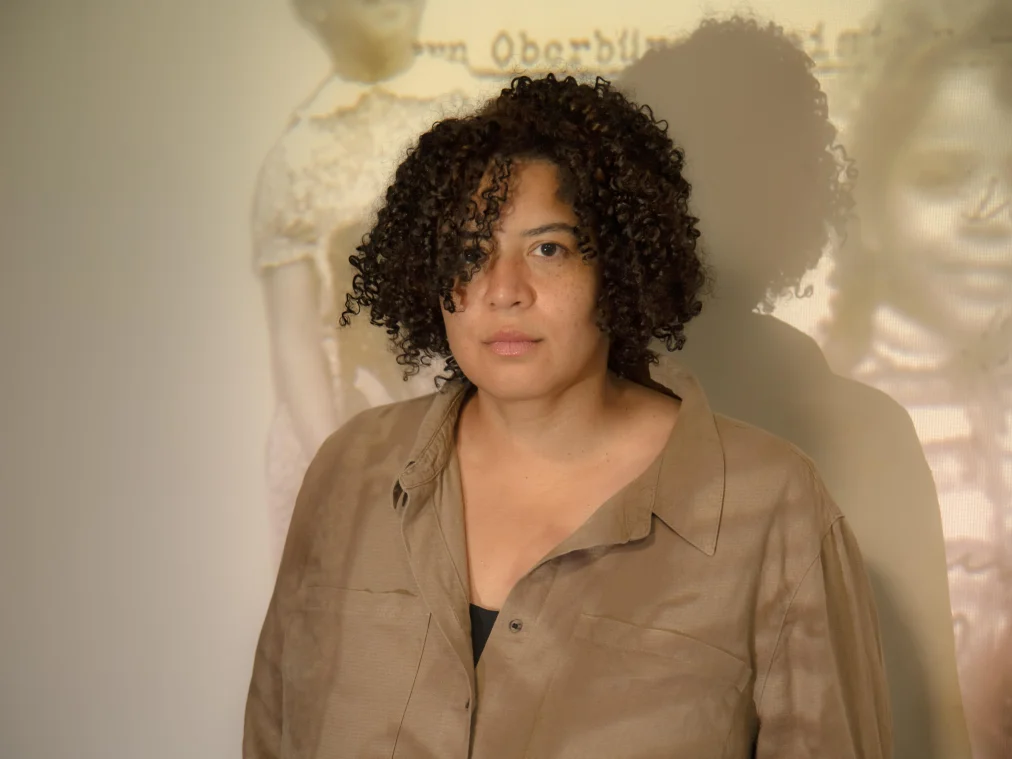
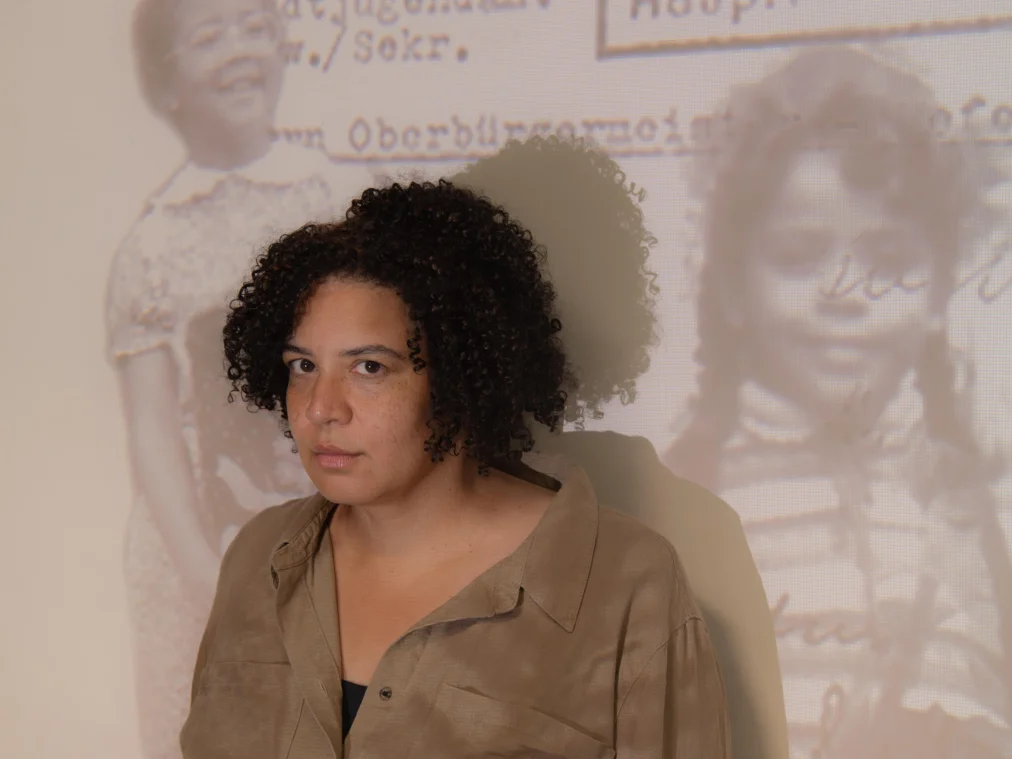
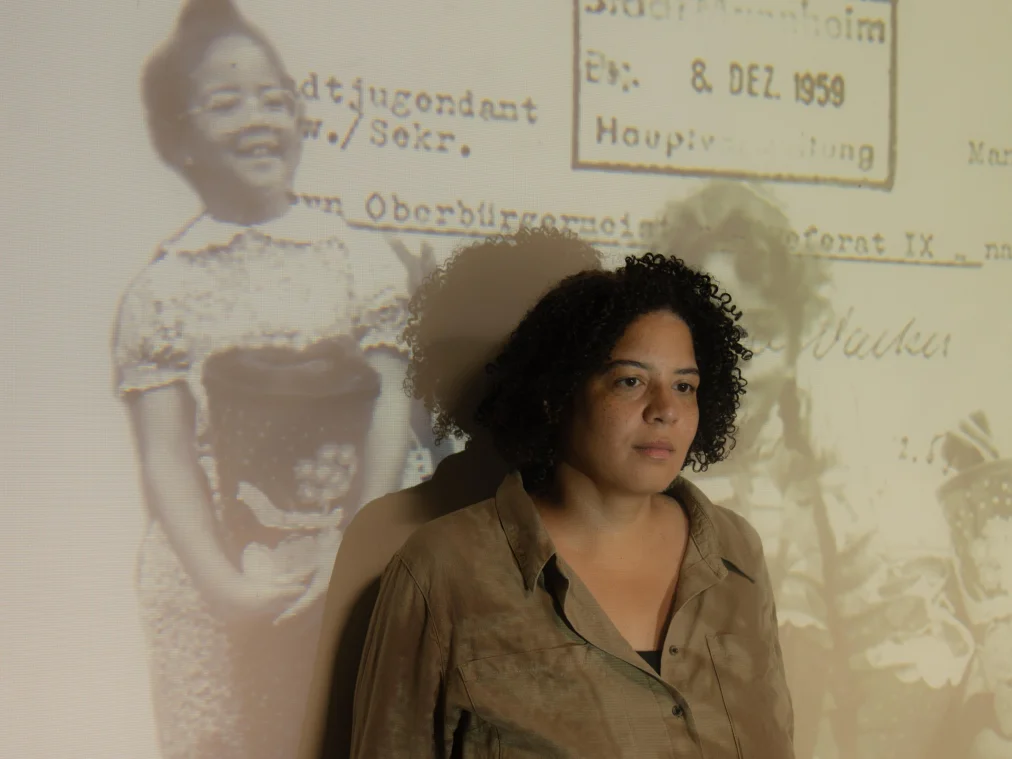
Schwarze Leute – Reclaiming Memories is a belated look into the files. Soon after the Second World War, Afro-German children were born in postwar Germany: children of white German women and Black soldiers of the US Army. Politicians and public authorities declared these children a problem and made sure that many of them did not grow up with their families, but were placed in children’s homes or sent abroad.
Many of these life stories began in West Berlin, but also in Frankfurt am Main, Mannheim, Stuttgart—everywhere within the American sphere of influence. To this day, this part of German postwar history has barely been researched.
What began in Unauthorized and Unverschämt (Sophiensæle, 2024) as biographical research, Simone Dede Ayivi & Kompliz*innen now expand into an investigation of institutional racism in the early Federal Republic. How was such a thing possible after the end of National Socialism—and how do we find a language that spares those affected while sparing nothing in its reckoning with a largely indifferent society?
Schwarze Leute asks how the history of bureaucratic violence is handled today: it asks about missing transparency, institutional inertia, and the emotional toll on those who, even after decades, are still denied access to their files.
In simple words
Schwarze Leute – Reclaiming Memories tells the story of Afro-German children born after 1945. Their mothers were white Germans, their fathers Black US soldiers. Authorities separated many children from their families. That was racism. Simone Dede Ayivi & accomplices ask: How was this possible? And why are those affected still not allowed to see their files?
The performance addresses racism and racist violence, including violence by authorities, within the school system, and in the form of psychological and verbal abuse. The archival material shown includes racist language, both written and spoken.
The information on accessibility is still in progress and will be updated as soon as possible. If any questions remain unanswered until then, please feel free to contact the communication department at barrierefreiheit@sophiensaele.com or 030 27 89 00 35. Please note that details may change by the day of the event. Therefore, if you find out after you have purchased your ticket that the performance is no longer accessible to you, you can contact us for a ticket return at ticketing@sophiensaele.com or 030 27 89 00 45 until 5 business days after the event (Monday through Friday between 10am and 6pm).
Early boarding
If, for artistic reasons, the door to the auditorium does not open until very shortly before the performance begins, there is the option of early boarding.
Tickets
- Reservations can be made via the ticket telephone at 030 283 52 66, Monday to Friday from 4pm-6pm
- Via the online ticket shop
- At the box office
You can also find more information about accessibility at the house here.
Concept, text, performance: Simone Dede Ayivi
Dramaturgy: Jens Hillje
Set design: Lani Tran-Duc
Costume design: Mariama Sow
Sound, music: Johannes Birlinger
Video: Jones Seitz, Fine Freiberg
Lighting, special effects: Frieder Miller
Outside eye: Bahar Meriç
Technical direction: Lui Marschewski
Artistic project assistance: Charlotte Rosengart
Set and costume assistance: Luca Plaumann
Press: Sarah Rosenau
Production management: ehrliche arbeit – freies Kulturbüro
A production by Simone Dede Ayivi & Kompliz*innen in co-production with Sophiensæle and Künstler*innenhaus Mousonturm. Funded by the Berlin Senate Department for Culture and Social Cohesion and the Capital Cultural Fund (HKF). Media partners: The Berliner, Missy Magazine, Siegessäule, taz, tip Berlin.
Simone Dede Ayivi’s performances discuss questions of representation, resistance and community. Her works are biographically motivated, mostly interview-based research projects. She explores ways of remembering and rediscovering - and shines a spotlight on political struggles and movements, Black history and the present. Using recorded discussions, interviews and political speeches, she seeks to amplify the voices of marginalized communities. With Afrofuturistic narratives, she creates a space in the theater to ponder, translate and reinvent. A space for utopias. Dede Ayivi reveals her research methods and the means of theater, allowing the audience to become part of her content-related and aesthetic search process. The construction of images is also addressed and viewing habits are questioned.
Together with her Kompliz*innen, she has developed performances in cooperation with Sophiensæle, the Pavillon Hannover, the Künstler*innenhaus Mousonturm Frankfurt and the Festival Theaterformen. She has worked as a director at Schauspielhaus Graz, Theater Oberhausen and Deutsches Theater Berlin, among others. In 2022, Simone Dede Ayivi received the Tabori Award from the Fonds Darstellende Künste. In 2025 Simone Dede Ayivi & Komplizinnen is invited to the Impulse Festival for Performance, Theater & Dance with Autsch – Warum geht es mir so dreckig?
-
© Gedvilė Tamošiūnaitė -
© Gedvilė Tamošiūnaitė -
© Gedvilė Tamošiūnaitė